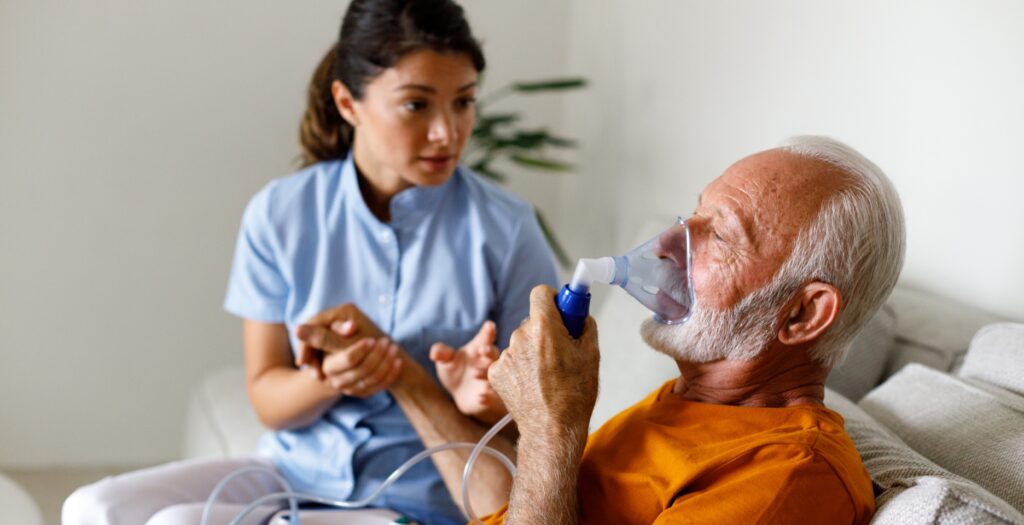
As we age, our lungs often become more vulnerable – less elastic, more sensitive to pollutants or infections, and slower to recover. But with the right attention and a tailored care plan, many seniors can maintain meaningful respiratory health and quality of life. Our new Pulmonary Home Health Program provides expert home care to improve outcomes and reduce readmissions for patients with high-risk COPD or chronic lung disease.
Older adults often live with multiple health conditions (multimorbidity), altered drug metabolism, and reduced physiological reserves, all of which affect how lung disease presents and how it should be treated. Diseases such as chronic obstructive pulmonary disease (COPD), asthma, interstitial lung disease, and pulmonary hypertension tend to be more complex and may progress more subtly or rapidly in seniors. Delirium, frailty, and mobility loss may follow acute lung events or hospitalization, making the recovery phase especially delicate.
Bottom line: a “one-size-fits-all” guideline isn’t enough; quality care must be age-friendly, personalized, and coordinated.
Pulmonary disease can impact breathing comfort, energy, and day-to-day independence. Our new multidisciplinary team includes Respiratory Therapists, Skilled Nurses, and Rehabilitation Specialists focused on COPD and other chronic lung conditions, while also addressing related comorbidities like CHF (chronic heart failure) to support overall patient health. This new program accepts patients with Traditional Medicare.
Our certified respiratory therapists, skilled nurses, and rehabilitation specialists help patients breathe easier and live more independently – without leaving home. Our in-home Pulmonary Home Health Program helps patients and their families with:
Leading respiratory care experts recommend applying frameworks that focus on what matters to the older individual – not just lung numbers. This involves monitoring/supporting mobility, minding the medication burden, and assessing cognition and mental status.
Pulmonary function tests (PFTs) are foundational to assessing lung impairment, tracking progression, and guiding therapy adjustments. In seniors, these tests should be interpreted with caution, accounting for age-related declines and comorbidities. Frequent monitoring helps detect worsening disease early and avoid hospitalizations.
Far from being passive, quality care encourages active engagement. Pulmonary rehab is a cornerstone – combining exercise training, breathing strategies, education, and psychosocial support.
Bronchodilators, inhaled corticosteroids, and other medications remain mainstays of lung therapy. But in older adults, extra care is needed to:
Strong pulmonary care includes prevention of exacerbations and complications:
In advanced or refractory lung disease, high-quality care includes early conversations about goals, symptom relief, and comfort – not just escalation to more intervention. A palliative approach can ease anxiety, improve quality of life, and align treatments with individual priorities.