A collection of informational tips and resources for patients and their families.
FILTER
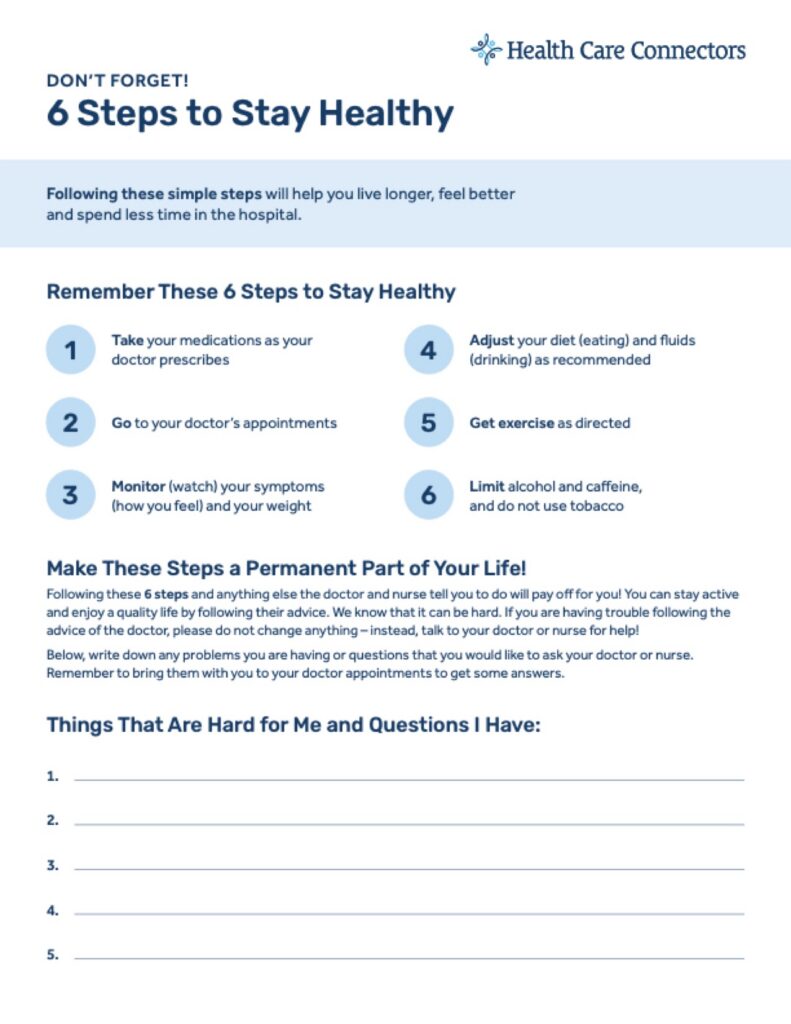
6 Steps to Stay Healthy
Following these six simple steps can help you live longer, feel better, and spend less time in the hospital. The guide also includes space to write down anything that’s hard for you and questions to bring to your next doctor appointment.
The Modified Borg Scale helps you rate how short of breath you feel during exercise and daily activities on a scale of 0 to 10. Write down your number each day, note whether it’s getting better or worse, and use your COPD Zone Tool to decide what action to take.
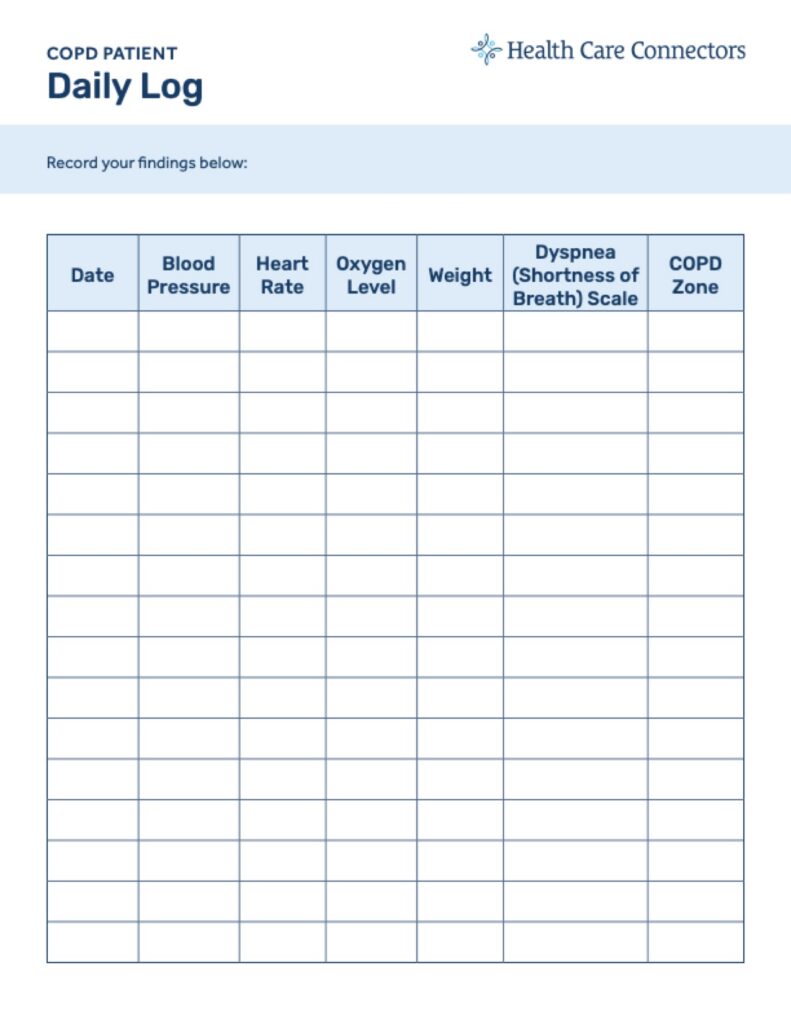
Keeping track of how you feel each day helps you and your care team spot changes in your COPD early. Use this daily log to record your blood pressure, heart rate, oxygen level, weight, shortness of breath rating, and COPD zone, and share it with your care team at every visit.
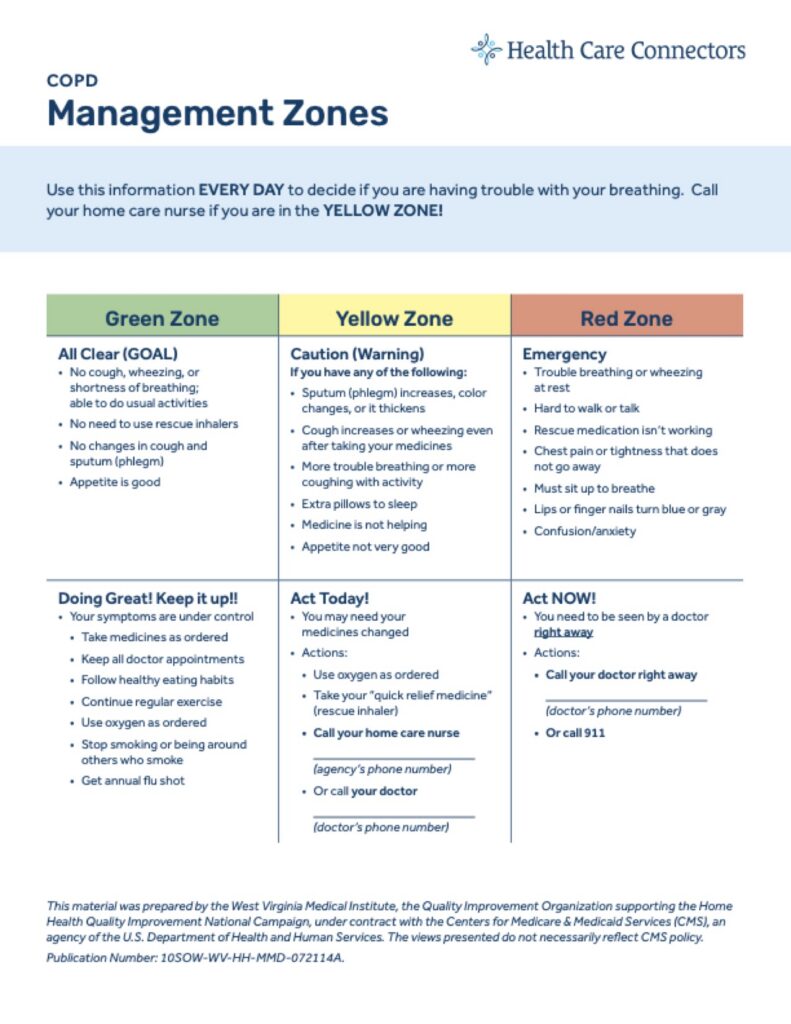
Changes in your breathing can be a sign that your COPD needs attention. Use these green, yellow, and red zones every day to check how you’re doing, know what actions to take, and know when to call your home care nurse or doctor.
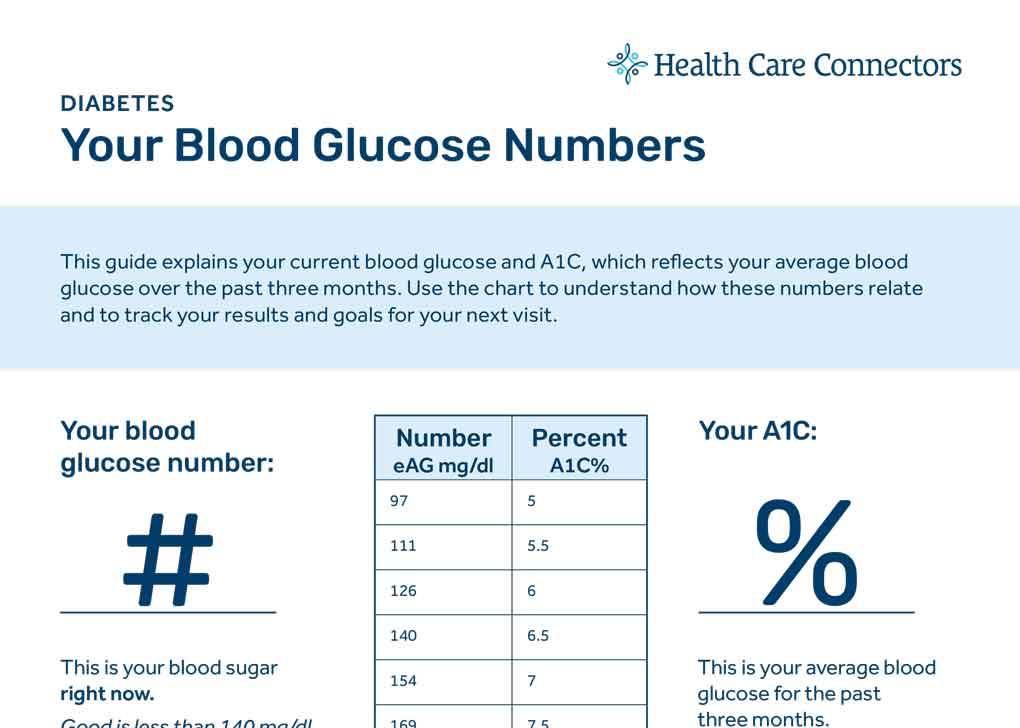
Understanding your numbers is key to managing diabetes. This guide explains the difference between your current blood glucose and your A1C, shows how the two relate, and gives you space to track your results and set goals for your next visit.
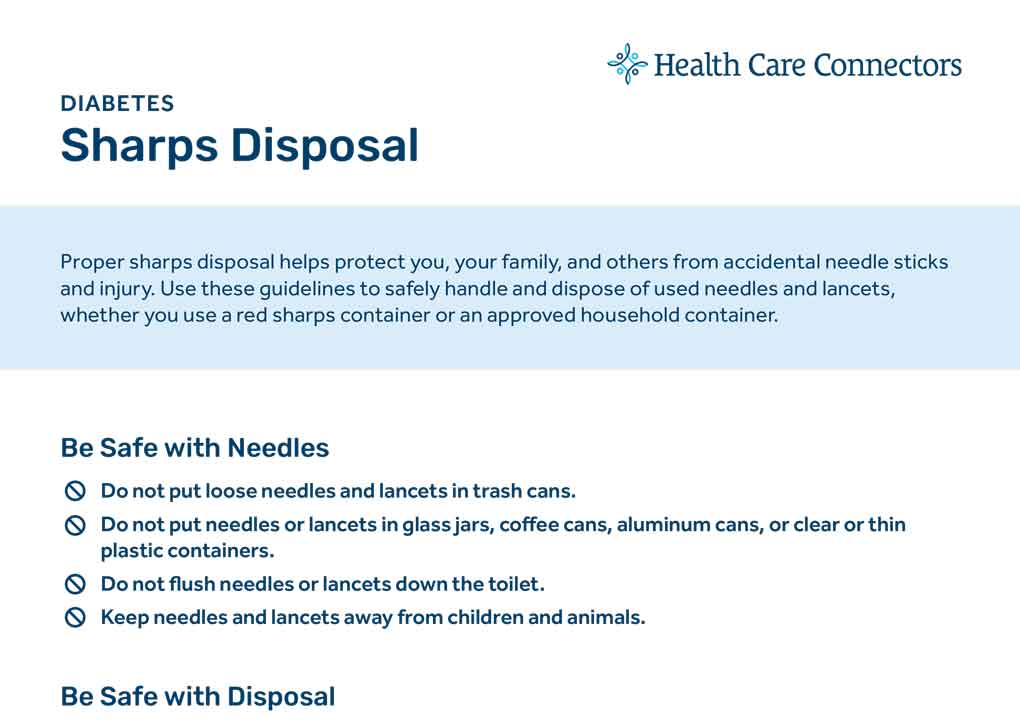
Proper sharps disposal helps protect you, your family, and others from accidental needle sticks. Learn how to safely handle and throw away used needles and lancets, whether you use a red sharps container or a thick plastic household bottle.
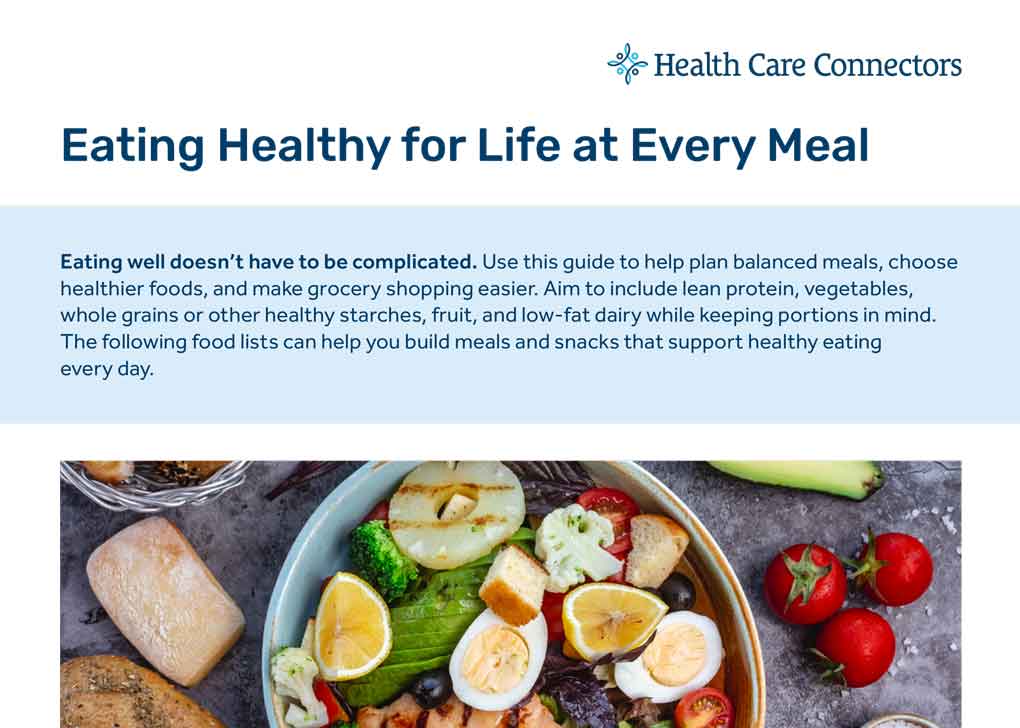
Eating well doesn’t have to be complicated. Use this guide to plan balanced meals, choose healthier foods, and make grocery shopping easier. It includes simple everyday tips and a printable checklist of lean proteins, vegetables, fruits, whole grains, and snacks.
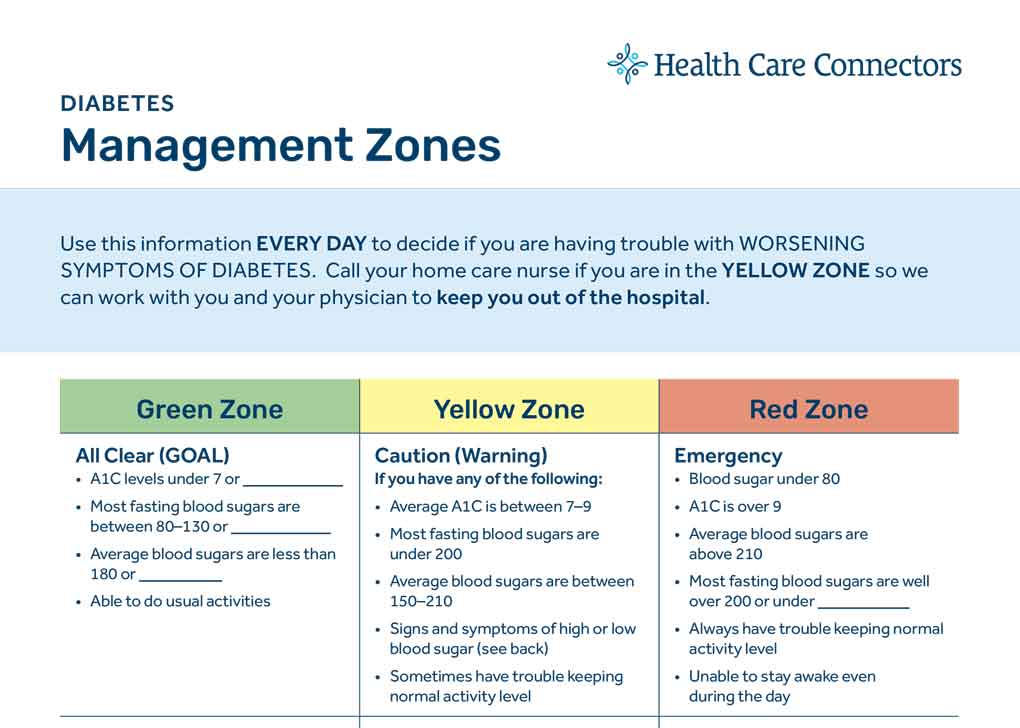
Changes in your blood sugar can be a sign that your diabetes needs attention. Check these green, yellow, and red zones every day to see how you’re doing and know when to call your care team. The guide also covers the signs, causes, and treatment of low and high blood sugar.
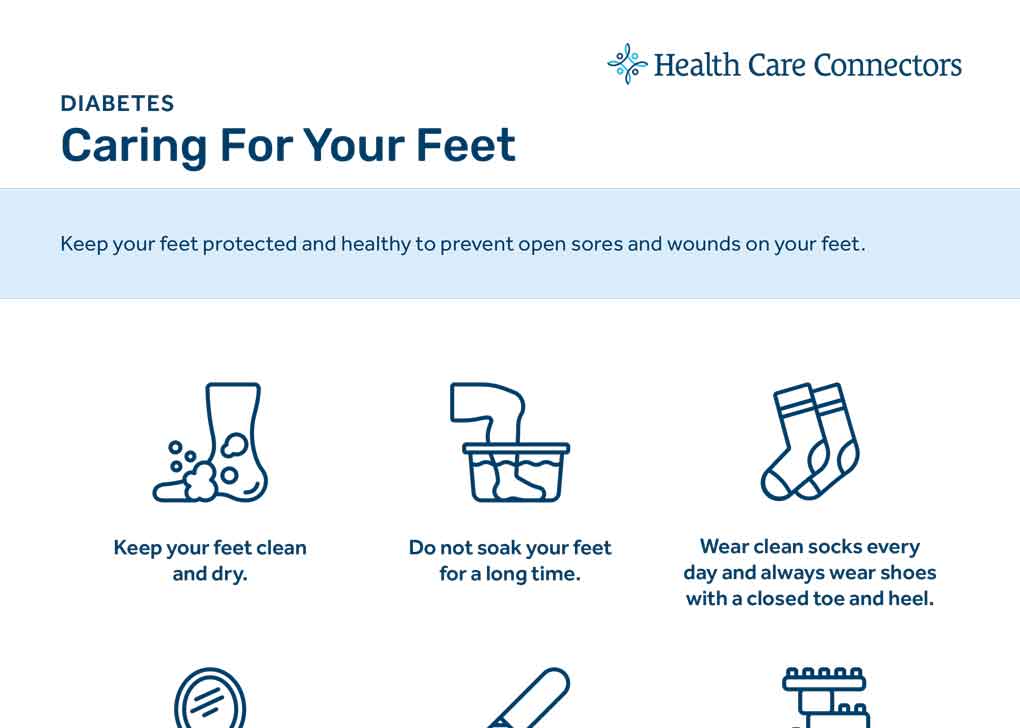
Simple daily habits can help keep your feet healthy and prevent open sores and wounds. Learn how to clean, check, and protect your feet, plus what to look for when choosing shoes that fit well and support you as you walk.
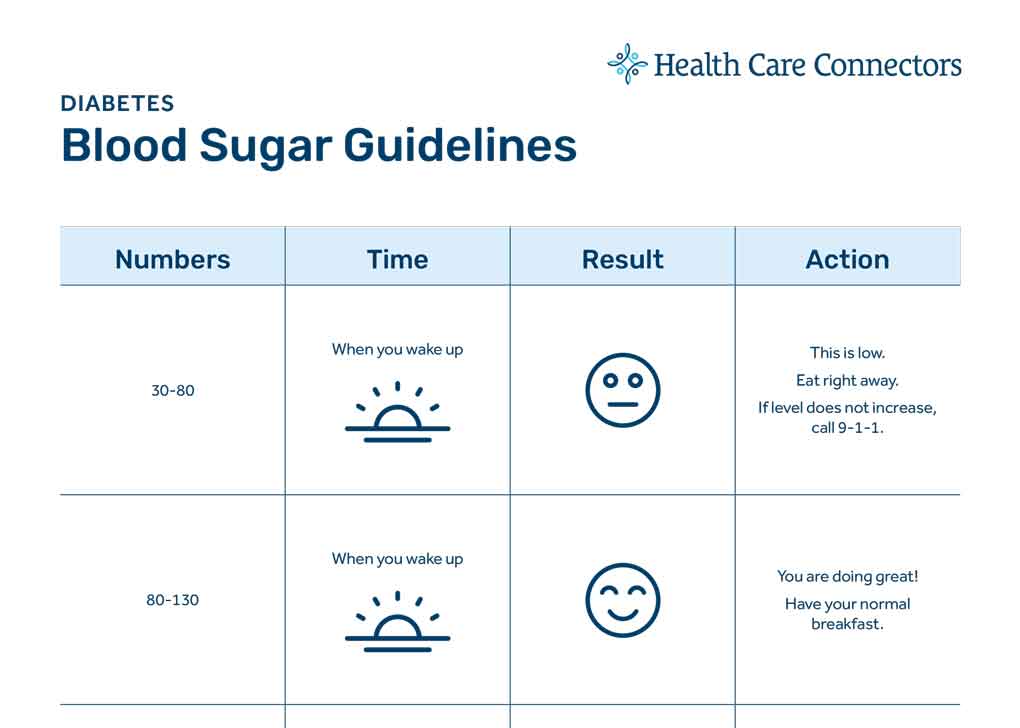
Knowing what your blood sugar numbers mean helps you respond quickly when levels are too high or too low. This quick-reference guide explains healthy ranges throughout the day and the steps to take when your readings fall outside them.