
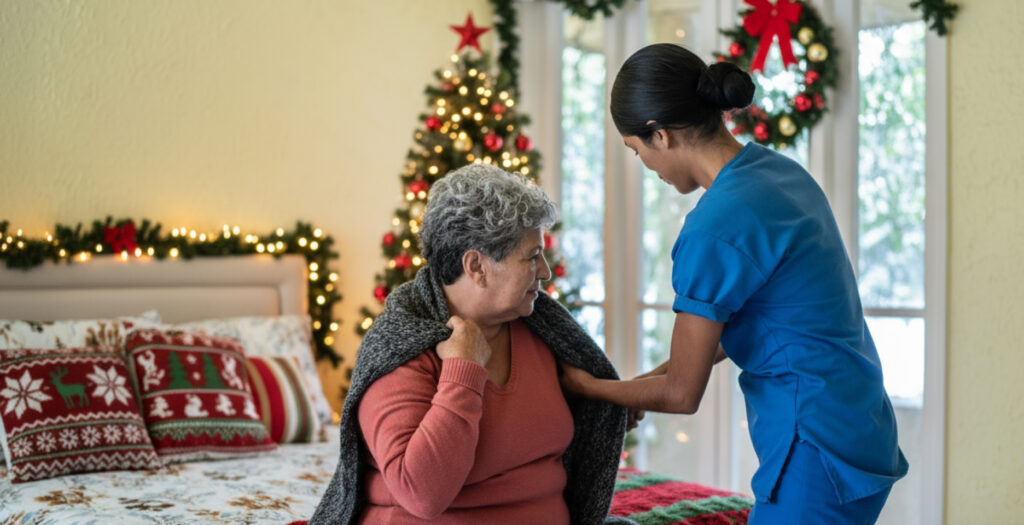
The holiday season is meant to be a time of warmth, connection, and joy – but for too many seniors, it can be a source of stress instead. From packed schedules to painful memories, what’s meant to be “the most wonderful time of the year” can quickly feel overwhelming. But you can help – with a few thoughtful adjustments and support, the holidays can become calmer, safer, and more enjoyable for older adults.
We’ve gathered a few helpful tips and advice for reducing holiday stress for seniors – and making this season one to truly cherish…
Back-to-back events and obligations can be exhausting, especially for seniors who need more rest or have mobility challenges.
Try to set boundaries around the holiday schedule. Choose a few meaningful activities rather than trying to do everything. Spread out plans over several days instead of cramming everything into one weekend. Allow plenty of time for rest and recovery between outings.
Sudden changes in daily structure – meals at odd hours, late nights, or disrupted medication times – can affect a senior’s well-being, especially for those with cognitive or health issues.
Stick to regular routines whenever possible. Try to keep mealtimes, sleep schedules, and medications consistent. If plans require flexibility, make sure necessary adjustments (like a packed pill organizer or earlier dinner time) are made ahead of time.
Seniors may feel pressure to decorate extensively as they always have, even when it becomes physically difficult or unsafe.
Encourage simple, safe decorating options like tabletop trees, battery-powered candles, or wreaths. Offer to help with setup and take-down. Remember: holiday spirit doesn’t require a ladder or a tangle of lights.
Seniors might feel they’re expected to host, bake, shop, or participate the same way they did years ago, leading to feelings of inadequacy or guilt.
Reassure them that traditions can evolve. Suggest new, manageable roles – like sharing a favorite recipe rather than cooking the whole meal, or storytelling instead of shopping. Make it clear their presence is more important than their productivity.
Buying and wrapping gifts can be physically and financially stressful for seniors on limited incomes or with mobility limitations.
Offer to help shop online, write cards, or wrap presents. Encourage low-cost or handmade alternatives, such as sharing photos, recipes, or memory books. You might even suggest a family-wide “experience gift” or donation in someone’s name.
Busy, noisy environments can be overstimulating for older adults – especially those with hearing difficulties, dementia, or anxiety.
At family gatherings, provide a quiet room or designated spot where they can relax, read, or chat with one or two people at a time. Consider playing soft background music instead of loud party tunes, and keep lighting gentle.
Holidays often bring up memories of lost loved ones or past traditions, which can lead to sadness or grief.
Ask how they’re feeling – and be ready to listen. Acknowledge that mixed emotions are natural. Let them reminisce. Consider honoring lost family members together, maybe lighting a candle or preparing a favorite dish in their memory.
Long car rides, crowded airports, or unfamiliar environments can be particularly taxing for seniors.
If travel is involved, plan with comfort and accessibility in mind. Build in breaks, pack medications and snacks, and check for mobility accommodations. If travel isn’t an option, prioritize virtual connections through video calls or sending photo cards.
Holiday foods are often rich, salty, and/or sugary – a real challenge for those with dietary restrictions
Plan menus with health in mind. Offer lighter versions of classic dishes, or ensure there are options that meet their needs (low-sodium, gluten-free, etc.). Try healthy snacks like fruits and veggies. And let seniors serve themselves – to help control portion sizes.
Family members will always have different viewpoints – leading to uncomfortable confrontations at holiday gatherings.
Try your best to forgive and forget – after all, it’s the holidays. Focus on your similarities, and replace tension with something productive.
Seniors may feel left out of the action – or, conversely, overwhelmed by too much attention.
Invite them to participate in meaningful but low-stress ways. Ask for advice on recipes, let them share stories, or give them the honor of starting a toast or reading a holiday card. Balanced involvement helps them feel valued without pressure.
The holidays don’t have to be perfect to be special. For seniors, less is often more: less noise, less hustle, fewer obligations – but more connection, comfort, and presence. With understanding and a few thoughtful adjustments, we can create a season that reduces stress and honors the joy, memories, and wisdom our older loved ones bring to the table.
AARP
SilverSneakers
National Council on Aging
Mayo Clinic